Disclosure: As an Amazon Associate I earn from qualifying purchases. This post contains affiliate links, which means I may earn a small commission if you buy through them, at no extra cost to you. I only recommend books and authors I genuinely believe in.
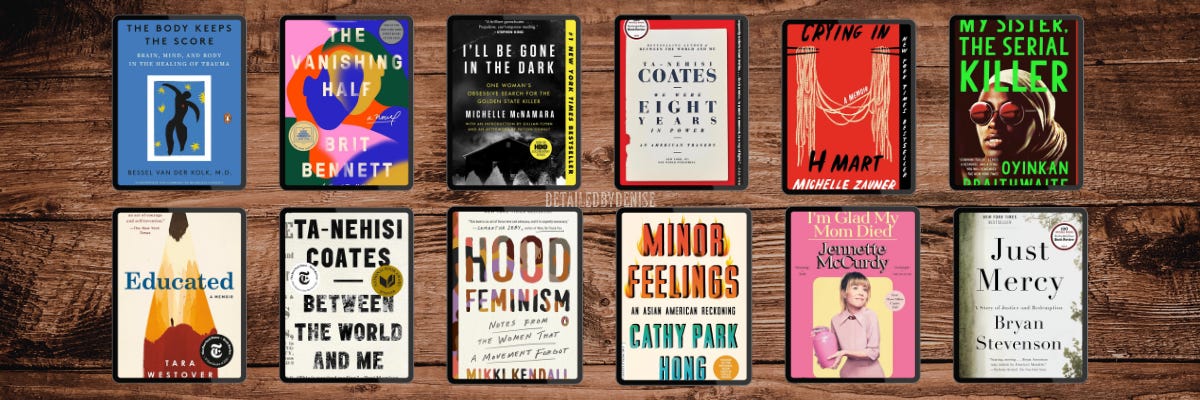
Some readers don't actually want a new perspective. They want their own reflected back at them in a prettier cover. And I get it, reading is emotional and personal. It's where we go to feel understood and safe, to find pieces of ourselves on the page.
But somewhere along the way, a lot of us built reading identities out of avoidance. "I only read romance." "I don't do literary fiction." "I hate fantasy." "I don't read anything that feels political."
Newsflash: reading is political.
Every story carries values, perspective, and power, whether we clock it or not. None of these preferences are wrong on their own. Preferences are normal. But when a preference hardens into a rule, something shifts. Because once you only read inside your comfort zone, you're not exploring stories anymore. You're building an echo chamber with a cute shelf.
The Algorithm Wants You to Stay Small
Everything about modern reading culture nudges you toward specializing. BookTok feeds you more of what you already liked. Goodreads serves up the read-alikes. Subscription boxes and influencers build tight little niches where you almost never bump into anything unfamiliar.
It feels personalized and efficient, like you finally cracked your own taste. And then it gets predictable. The beats feel familiar, the archetypes repeat, the emotional arcs land exactly where you knew they would. Slowly, without deciding to, your reading life stops growing.
Comfort Reading Isn't the Problem. Avoidance Is.
Let me be clear, comfort reads are not the enemy. We all need books that feel like home, the ones that recharge us when life is heavy. The problem starts when avoidance starts calling itself taste. When whole genres get written off without a shred of curiosity. When an unfamiliar cultural perspective gets labeled "too heavy." When anything that asks for patience or discomfort gets shoved aside.
Growth needs friction. And reading is one of the safest places on earth to feel friction with zero real-world cost. You can sit inside a perspective that unsettles you, close the book whenever you need to, and walk away understanding a life that isn't yours a little better. That's not a small thing.
Stories Expand Your World If You Let Them
Reading outside your lane doesn't mean abandoning what you love. It means admitting your view is one version of reality, not the whole of it. Books hand you other cultures, other emotional frameworks, other ways of seeing. They poke at assumptions you didn't know you were holding. If every book you read feels familiar, you're probably reinforcing your worldview instead of stretching it. Familiar is fine. It just shouldn't be the only thing steering the ship.
The Part That Feels Scary
Trying something new as a reader can feel weirdly exposing. You might not get it, or it might not click, or everyone else adores it and you just don't. But being a curious reader means accepting that not every experiment lands. Some books won't work for you. Some styles won't move you. That doesn't mean the reach wasn't worth it. It means you learned something, about story, about perspective, about yourself.
Think You're Open-Minded? Pick Something Here That Makes You Hesitate.
If your gut reaction to a category is "that's not really my thing," pause right there. That flicker of resistance is usually pointing straight at where your reading life could grow. You don't have to love everything you try. The goal isn't a perfect track record, it's curiosity. So start with something a step outside your usual lane but still easy enough to keep you turning pages. Starred titles are personal favorites.
If You Mostly Read Romance
Fiction to try:
- The Seven Husbands of Evelyn Hugo by Taylor Jenkins Reid
- Normal People by Sally Rooney
- Giovanni's Room by James Baldwin
- Yellowface by R.F. Kuang
Nonfiction to try:
- All About Love by bell hooks
- Know My Name by Chanel Miller
If You Mostly Read Fantasy or Romantasy
Fiction to try:
- Piranesi by Susanna Clarke
- Babel by R.F. Kuang
- The Spear Cuts Through Water by Simon Jimenez
Nonfiction to try:
- Braiding Sweetgrass by Robin Wall Kimmerer
- The Last Black Unicorn by Tiffany Haddish
If You Mostly Read Thrillers or Fast-Paced Books
Fiction to try:
- My Sister, the Serial Killer by Oyinkan Braithwaite
- The Vanishing Half by Brit Bennett
- Never Let Me Go by Kazuo Ishiguro
Nonfiction to try:
- I'll Be Gone in the Dark by Michelle McNamara
- Just Mercy by Bryan Stevenson
If You Mostly Read Contemporary or Literary Fiction
Fiction to try:
- Fourth Wing by Rebecca Yarros
- A Court of Thorns and Roses by Sarah J. Maas
Nonfiction to try:
- I'm Glad My Mom Died by Jennette McCurdy
- Crying in H Mart by Michelle Zauner
- Educated by Tara Westover
If You Want Nonfiction That Will Genuinely Stretch You
Fair warning, a few of these will make you a little uncomfortable, and that's the point.
- Between the World and Me by Ta-Nehisi Coates
- Hood Feminism by Mikki Kendall
- The Body Keeps the Score by Bessel van der Kolk
- We Were Eight Years in Power by Ta-Nehisi Coates
- Minor Feelings by Cathy Park Hong
What Being Well-Read Actually Means
Reading widely was never about proving you're smarter or deeper than anyone else. It's about refusing to let your curiosity shrink. A shelf full of only the familiar might be comforting, but it won't change you. The books that crack your worldview open are usually the ones you hesitate to pick up, the ones that challenge you, the ones that make you stop and actually think instead of nodding along.
The real flex isn't how many books you've read. It's how many different worlds you were willing to walk into. Being well-read was never about staying comfortable. It's about staying curious enough to keep growing.