Disclosure: As an Amazon Associate I earn from qualifying purchases. This post contains affiliate links, which means I may earn a small commission if you buy through them, at no extra cost to you. I only recommend books and authors I genuinely believe in.
Every few months, romance readers get cast as the villain in a fresh cultural panic. First it was fairy smut. Now it's hockey.
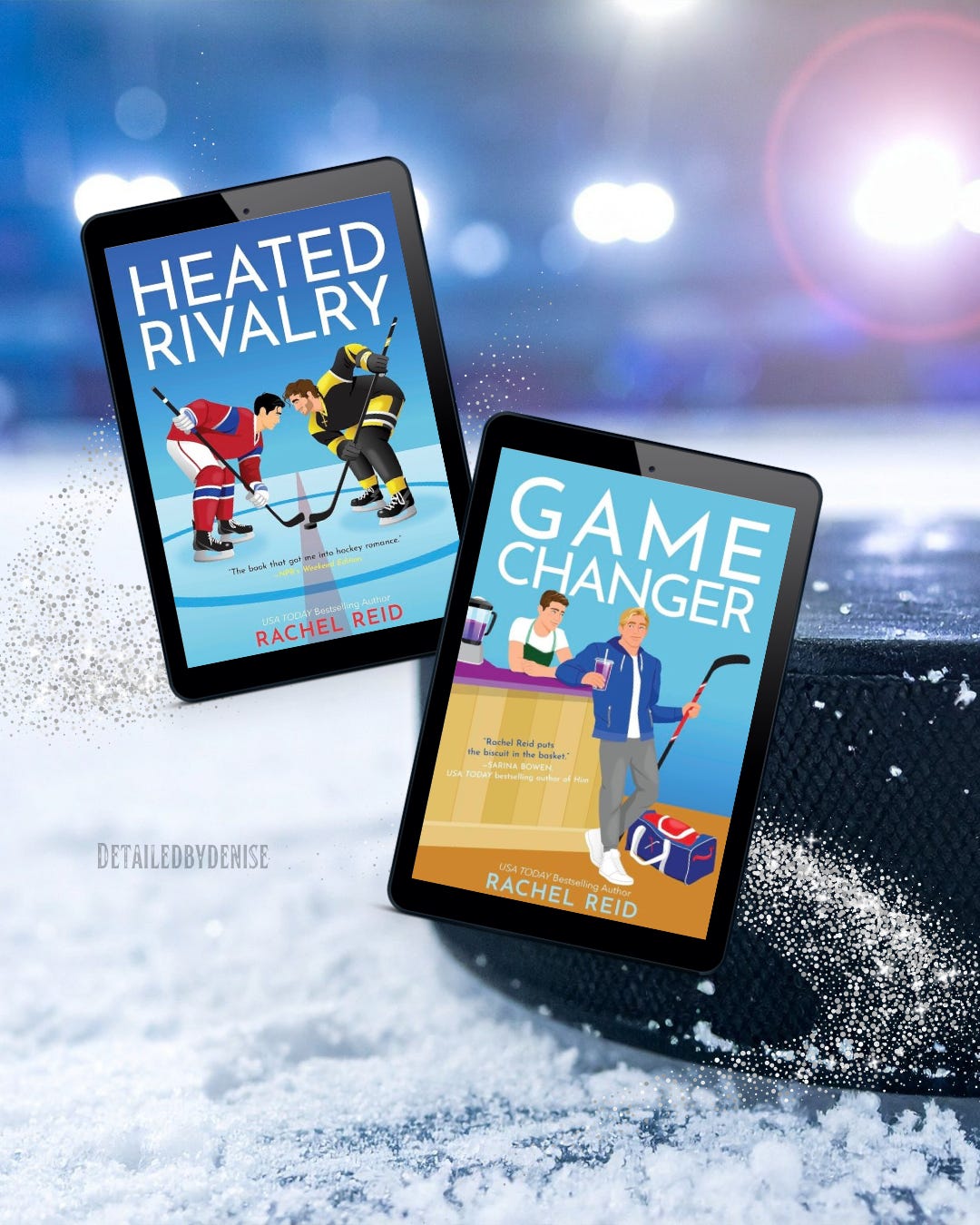
The latest one framed hockey romance and the adaptation of Heated Rivalry as the newest "smutty obsession," like readers discovering emotional, intimate storytelling is some kind of warning sign about society.
The whole thing reads less like criticism and more like a refusal to take romance seriously. Calling it "hockey porn" doesn't tell you anything about the genre. It tells you the writer is uncomfortable with who's allowed to enjoy desire out loud.
I Watched the Show. It Wasn't About the Sex.
Let me be clear, I've seen Heated Rivalry. I'm not even an MM romance reader, and I loved it. Not for the explicit scenes. For the chemistry. The push and pull between two people navigating vulnerability, identity, and connection while the pressure keeps rising.
What stayed with me wasn't shock. It was intimacy, the kind that comes from characters being emotionally exposed, messy, human, and completely invested in each other. That's good romance. Reducing it to "graphic content" says more about the person watching than the story on screen.
Romance Literacy Is Still Shockingly Low
The real problem with pieces like this isn't that they criticize romance. It's that they fundamentally misread it. Romance readers aren't hunting for isolated sex scenes. We're here for the payoff, the tension that builds slowly, the stakes that feel real, the characters who actually grow through each other, the vulnerability that gets earned instead of handed out.
Sex scenes in romance aren't interruptions to the story. They're part of it. They carry trust, power, healing, release. Calling that "porn" isn't analysis. It's just laziness with a byline.
And No, Romantasy Was Never "Fairy Porn" Either
The same dismissive shorthand gets aimed at romantasy, and it ignores what's actually on the page. War. Political intrigue. Survival and trauma. Morally gray worlds. Women fighting for agency and identity. Boiling entire genres down to spice is like judging a whole novel by one scene and skipping the rest. That's not a critique. That's avoidance dressed up as an opinion.
Hockey Isn't Being Rebranded. This Is Just What Fiction Does.
One take floating around is that hockey fans are mad their sport is being turned into romantic fantasy. But fiction has always borrowed real-world settings to raise the emotional stakes. Medical dramas don't redefine medicine. Legal thrillers don't rewrite the law. Romance isn't corrupting hockey. It's using a high-pressure world to tell a story about two people. That's the whole job.
The Comments Tell on Everyone
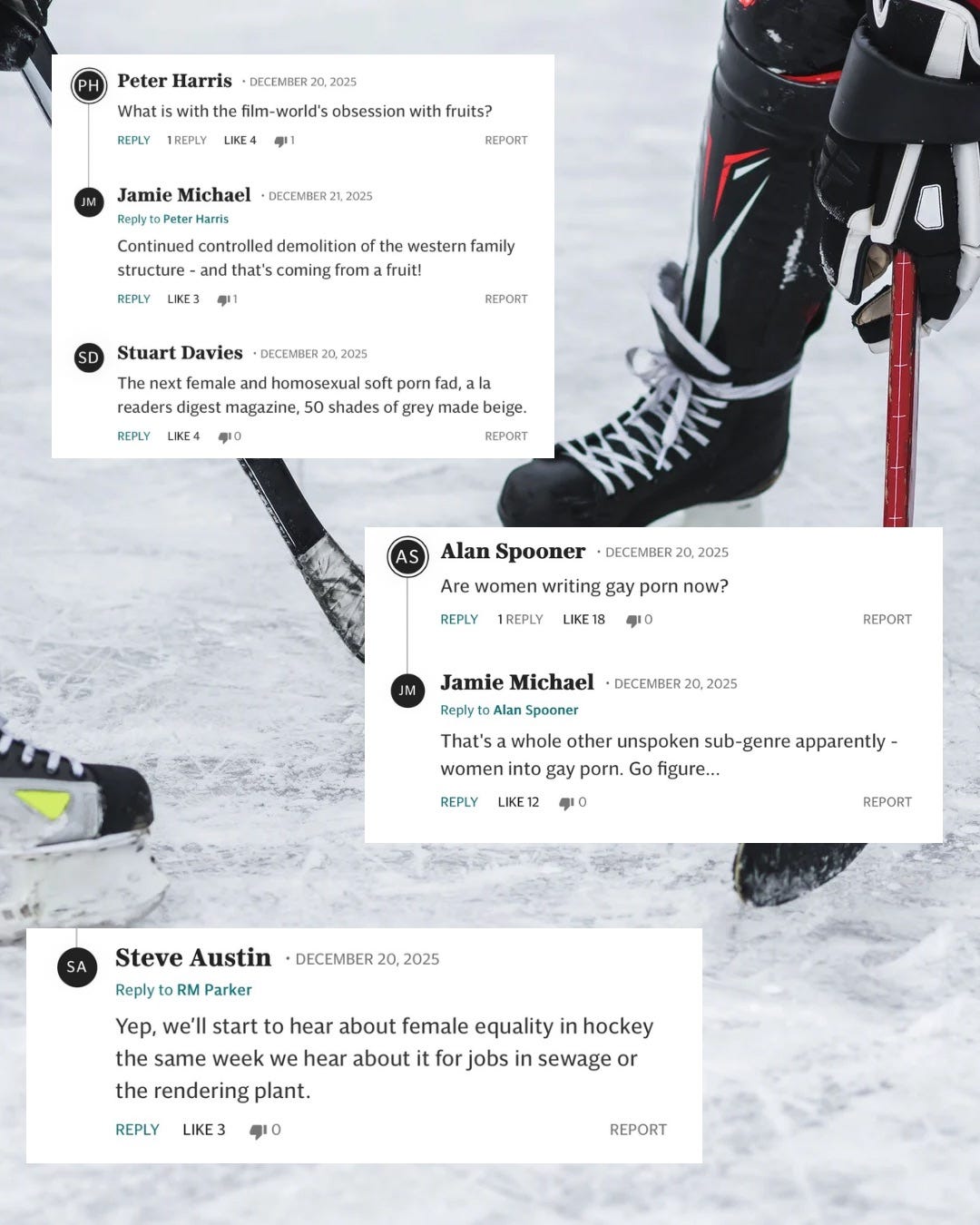
If you want to see the real issue, read the comments. The sneering. The tired jokes. The thinly veiled homophobia. The assumption that any woman reading MM romance must be fetishizing it rather than, you know, appreciating a good story.
It's not clever and it's not edgy. It's just old. Turning queer stories into punchlines while pretending to worry about literary standards isn't cultural commentary. It's discomfort wearing a joke as a disguise.
What This Is Really About
Underneath all of it is a simple pattern. Romance only becomes controversial when women openly enjoy it. Violent media gets a pass. Content built for the male gaze rarely triggers a moral panic. But the second women talk about desire and intimacy and emotional connection without apologizing for it, suddenly we're debating the decline of civilization. That double standard isn't subtle, and I'm tired of pretending it is.
Romance Isn't Shallow. The Conversation Around It Is.
Stories like Heated Rivalry hit because they put emotional intimacy first, vulnerability, longing, identity, connection, the things that have always been at the heart of storytelling. Romance isn't getting more explicit and dragging culture down with it. Critics just keep flattening emotionally complex stories into lazy headlines, and readers have stopped accepting the flattening.
Calling romance "hockey porn" or writing off romantasy as "fairy smut" isn't a bold take. It's shorthand for not wanting to engage with a genre built on emotional intelligence and connection. Romance isn't in decline. It's just visible now. And I think that visibility is exactly what's making people so uncomfortable.